
Audio Workouts - Expanding an AI MMA App Beyond Beginners
We've had audio workouts in our app for ages. They used to be a really big deal, front and center. But when we started focusing more on a structured path for beginners, we took them out.We brought back Audio Workouts to reach more people, especially seasoned users who felt the beginner path was a bit too slow and not very exciting.
Training / AI-generated content
Opportunity
The app did a great job helping beginners grasp MMA basics, but athletes who already knew their stuff needed more advanced workouts. They were looking for:
Getting into the workouts quicker.
Natural hands-free training for physical sessions.
Realistic training content.
Right now, folks hit a snag because everyone has to go through the same basic steps, no matter how good they are. This makes them impatient and bored, and they might even leave before they get to the good stuff. We need to streamline this to avoid early friction.
We saw a real opportunity by bringing back our Audio Workouts to expand the product’s target audience from “beginners only” to “all levels of MMA practitioners.”
Problem Statement
Intermediate and advanced MMA need quick, relevant coaching.
Our onboarding and progression funnel made every user start with the basics, which:
Made experienced users frustrated and leave sooner.
Low engagement and retention.
Lower lifetime value from ready-to-buy users.
This shaped activation, retention, and daily engagement.We rebuilt the feature to fix this issue and lean on the app’s strength: AI-made workouts that fit each user.
Business Goals
Boost activation among advanced users.
Increase retention by nudging people to come back for repeat workouts.
Grow the product’s reach to more types of users.
Build steady engagement over time by helping people form lasting habits.
Success was tracked by:
How many users create and start an audio workout?
Users saving a generated workout
Weekly workouts completed
Engagement patterns for new and returning users
User Insights (Driving Decisions)
To address both user needs and business goals, we restructured the Audio Workouts feature around these principles:
Experienced users want speed and control
They are focused on training, not learning.Quick starts, minimal workout setup
Physical training works best when goals and instructions are clear
In workouts, avoid visual clutter; give clear play/rest cues
Repeatable routines build habits
Workouts that can be saved and reused deepen engagement and support habit formation.
These insights led to decisions that shaped both UX and business outcomes.
Feature Strategy
Immediate Entry
Instead of making users complete beginner content first, Audio Workouts appear as a distinct option right after the martial art selection.
This prioritizes advanced users without changing the beginner learning path.
Streamlined Inputs
Users are prompted for only:
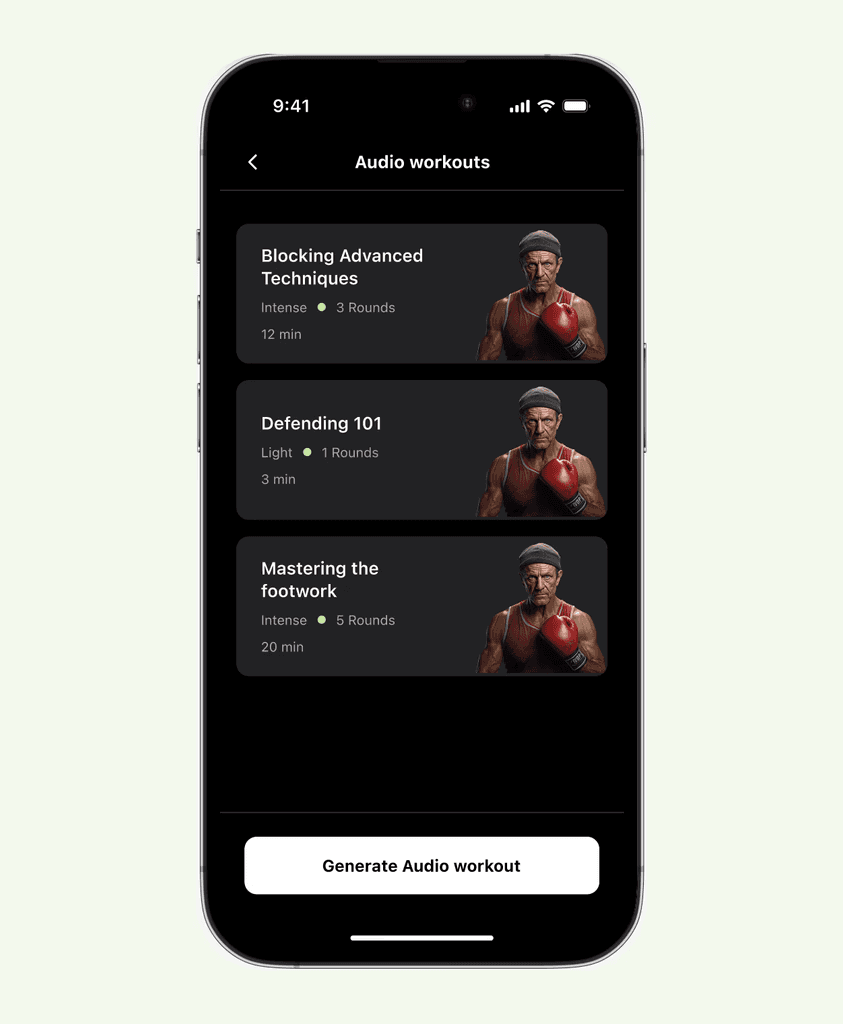
Intensity level
Number of rounds
We removed unnecessary inputs like equipment or skill filters (already known), minimizing friction and speeding up workout generation.
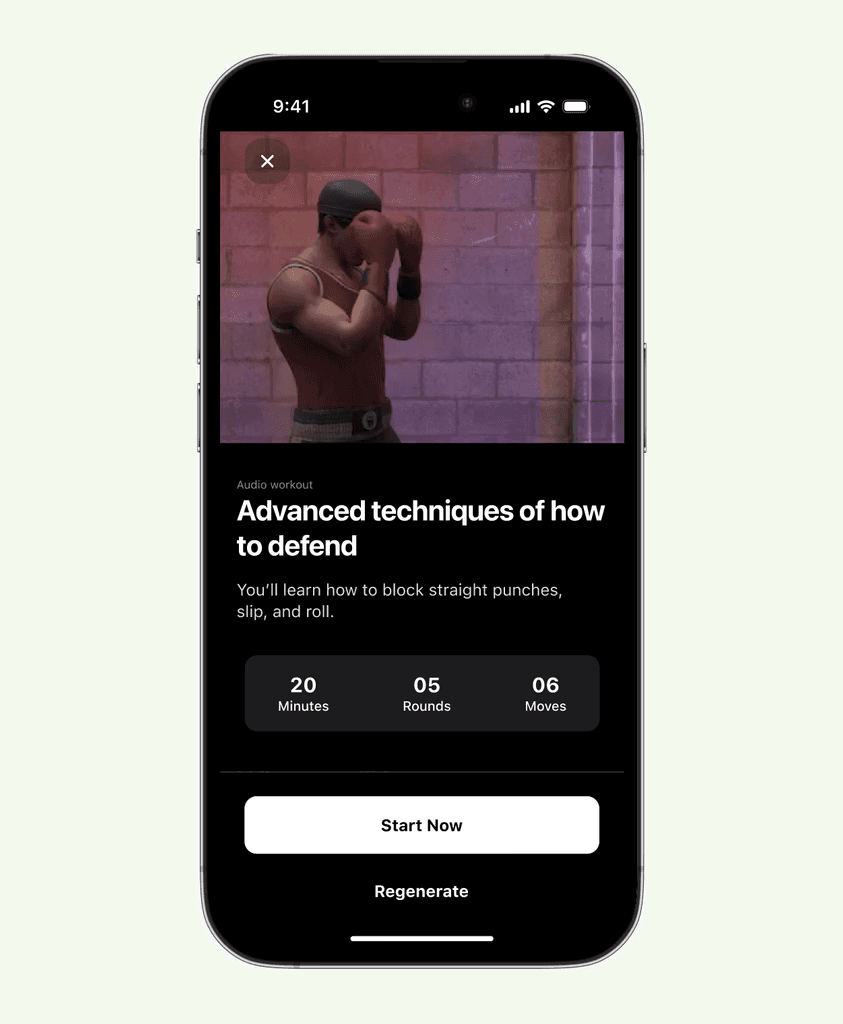
Pre-Workout Preview
Before starting, users see:
Estimated duration
Workout overview (“what to expect”)
Option to regenerate
This transparency builds trust and helps users make confident decisions before they commit physically.
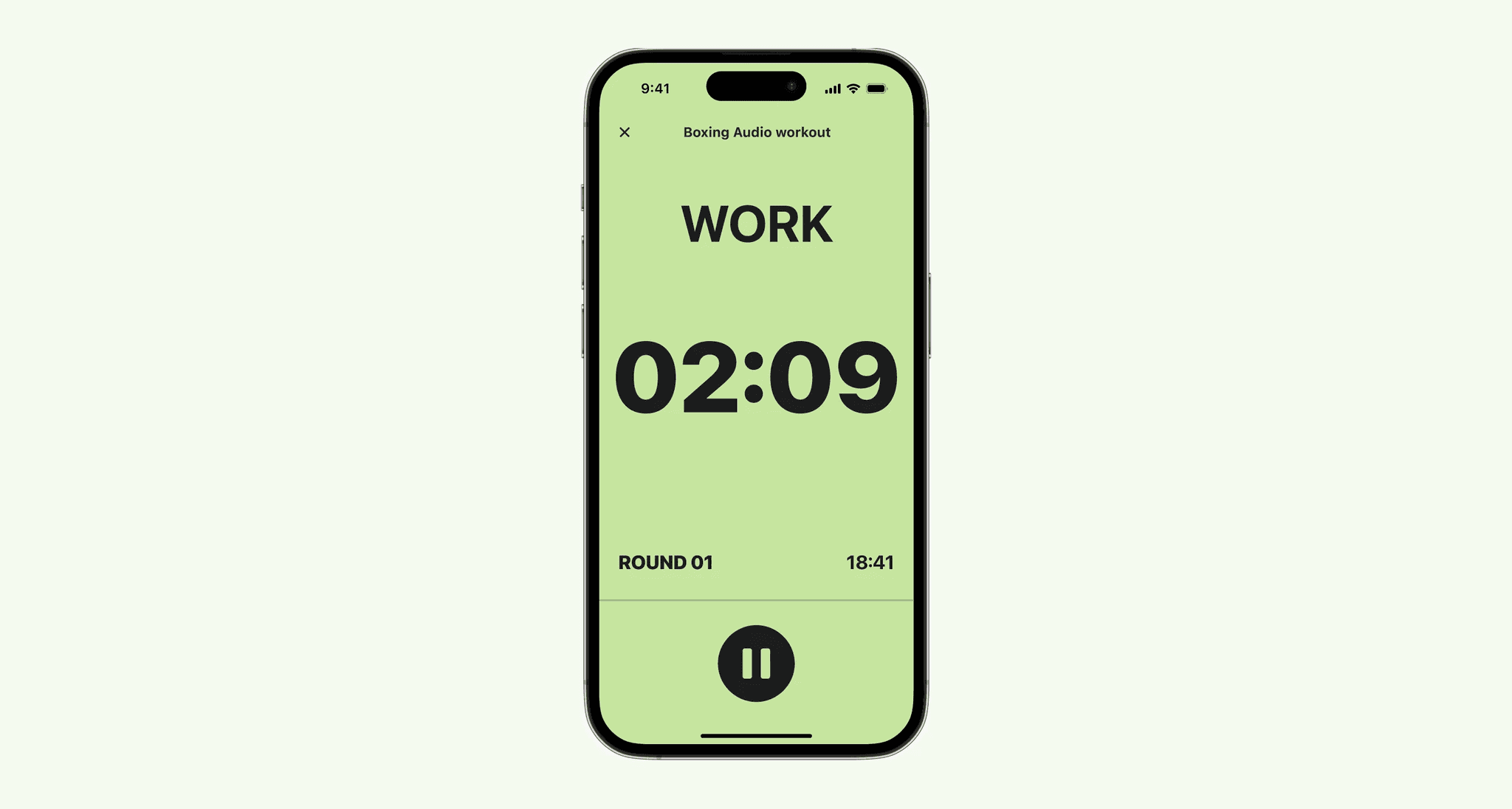
Timer-centric Workout Interface
The onscreen UI mimics a simple workout timer with clear play/rest states — optimized for glanceability during movement.
This acknowledges the context of use and reduces cognitive load.
Save & Repeat
Users can save workouts after completion. Saved workouts populate a Workout Library, making repeat training effortless.
This supports:
Habit formation
Higher return frequencies
Stronger retention signals
The new userflow
User selects martial art card (boxing, kickboxing, muay thai)
Chooses Audio Workouts
Sets intensity & number of rounds
Sees pre-workout preview with estimated time
Starts the workout
Finishes → Prompt to save or discard
Saved workouts appear in library for easy reuse
This flow reduces entry barriers and aligns with both user behavior and business objectives.
Outcomes
User Engagement
Advanced users accessed workouts sooner
More workouts were started per session
Retention Impact
Users who saved workouts came back more frequently
Saved libraries created personalized workout routines
Business Value
Expanded total addressable audience (beyond beginners)
Higher activation for experienced users led to stronger mid-term retention
Increased habitual engagement strengthened long-term value
We saw clear improvements in:
Frequency of feature use
Repeat sessions
Time-on-app during key training hours
(These metrics validated that design decisions were aligned with both user needs and business outcomes.)
35%
Improved onboarding process
25%
Increase in user retention
84%
Increase in time spent on app
Reflection
We brought back the Audio Workouts feature with a new design, so the product appeals to MMA users at every skill level, not only beginners.We made design changes to cut extra steps, set clear expectations, and encourage repeat use, which turned the UX updates into measurable business results.This case study explains what we built, the reasons behind each decision, and how those decisions showed up in measurable business results.